Will the aurora be visible tonight where I am?
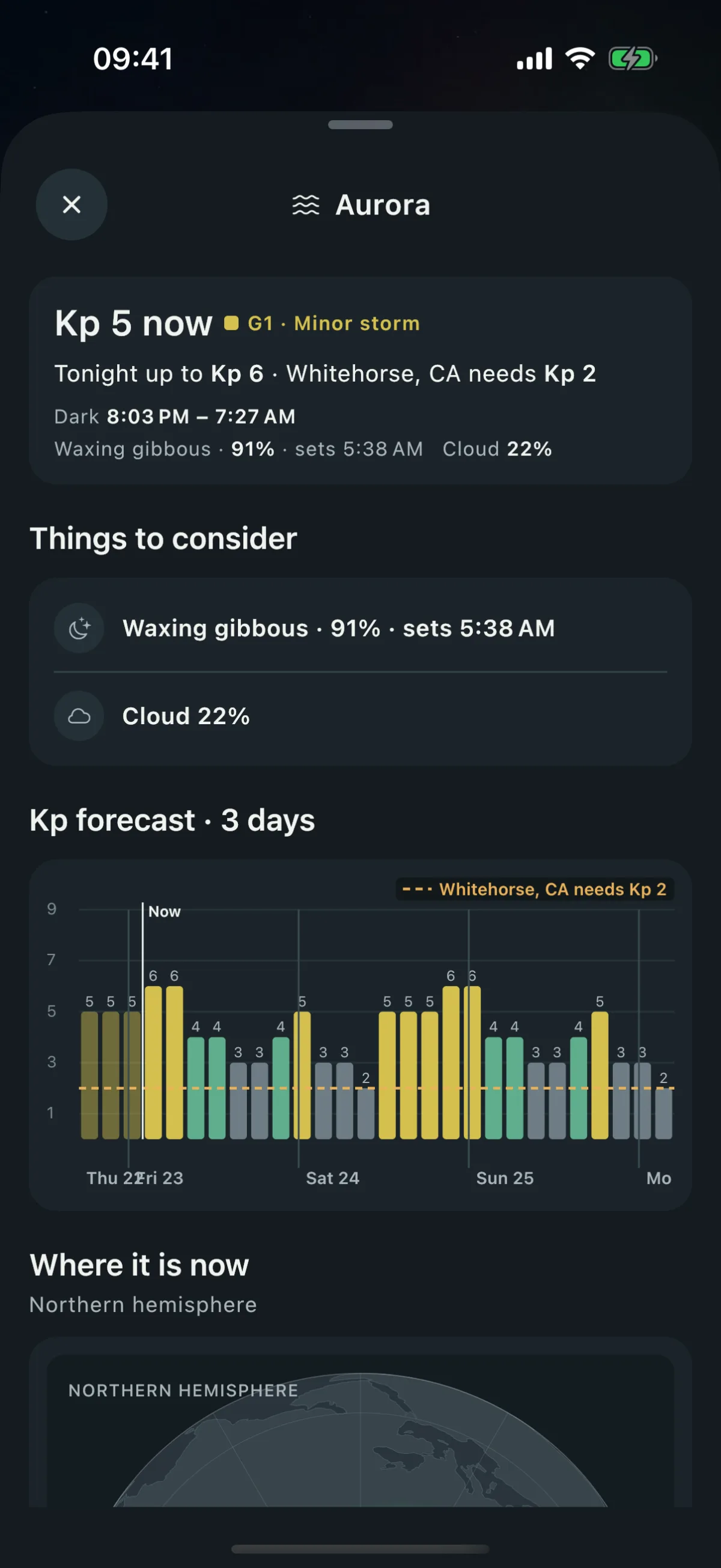
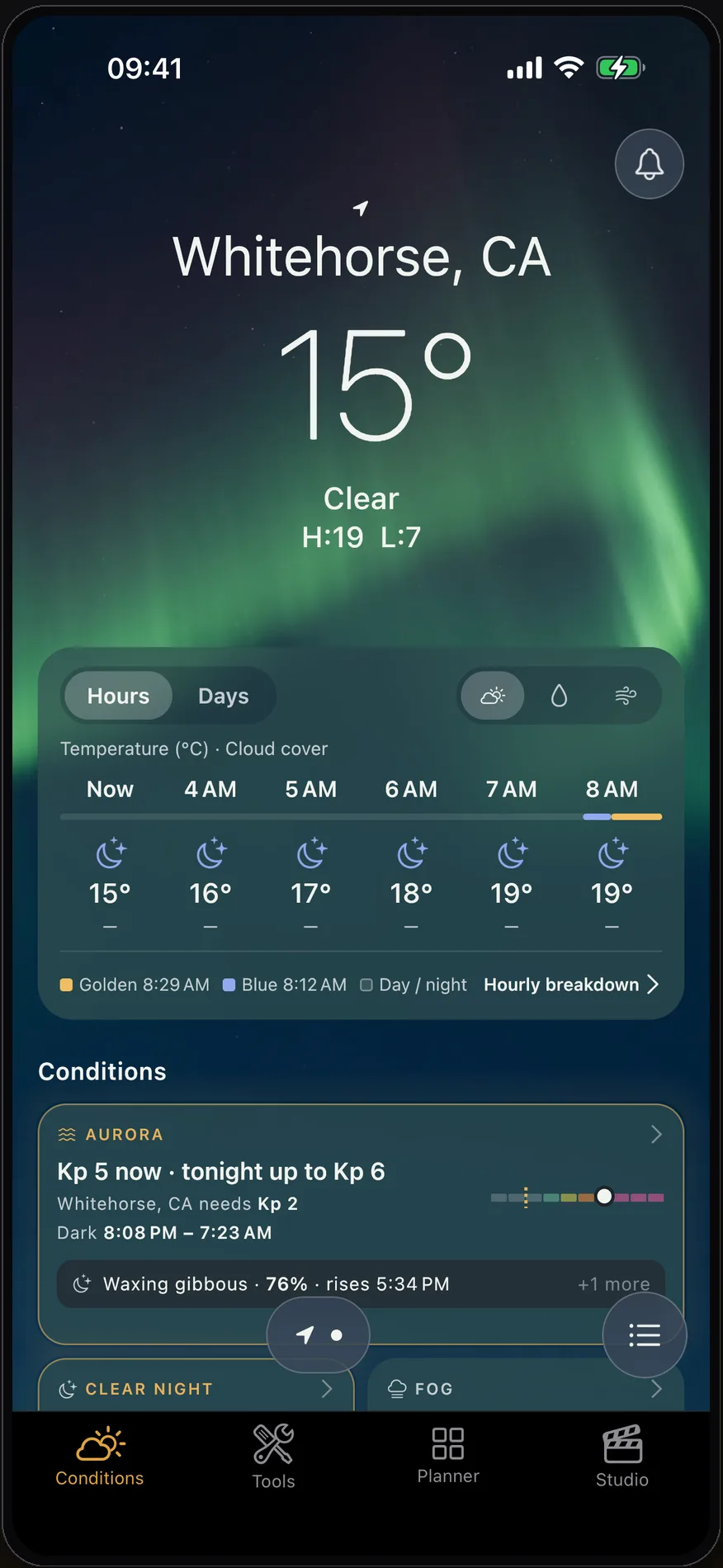
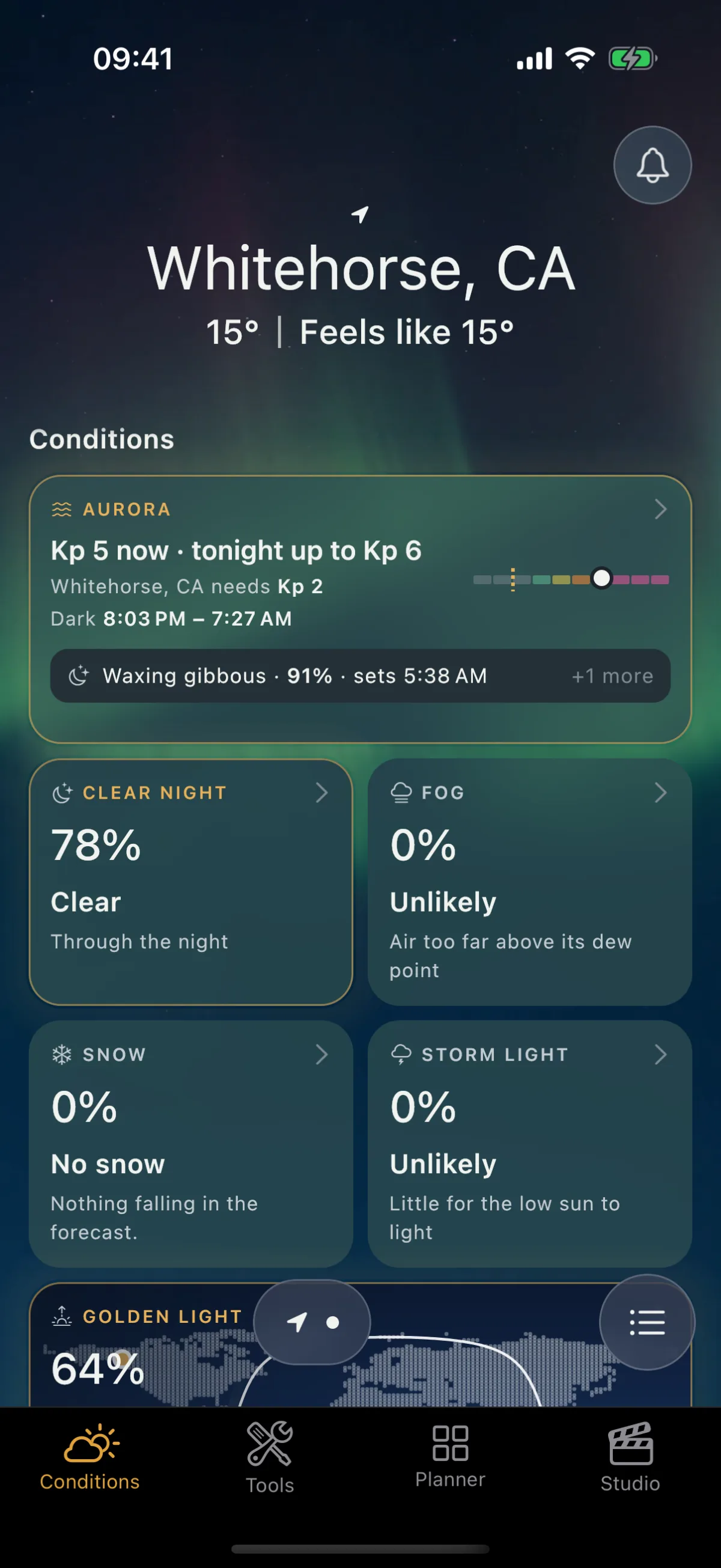
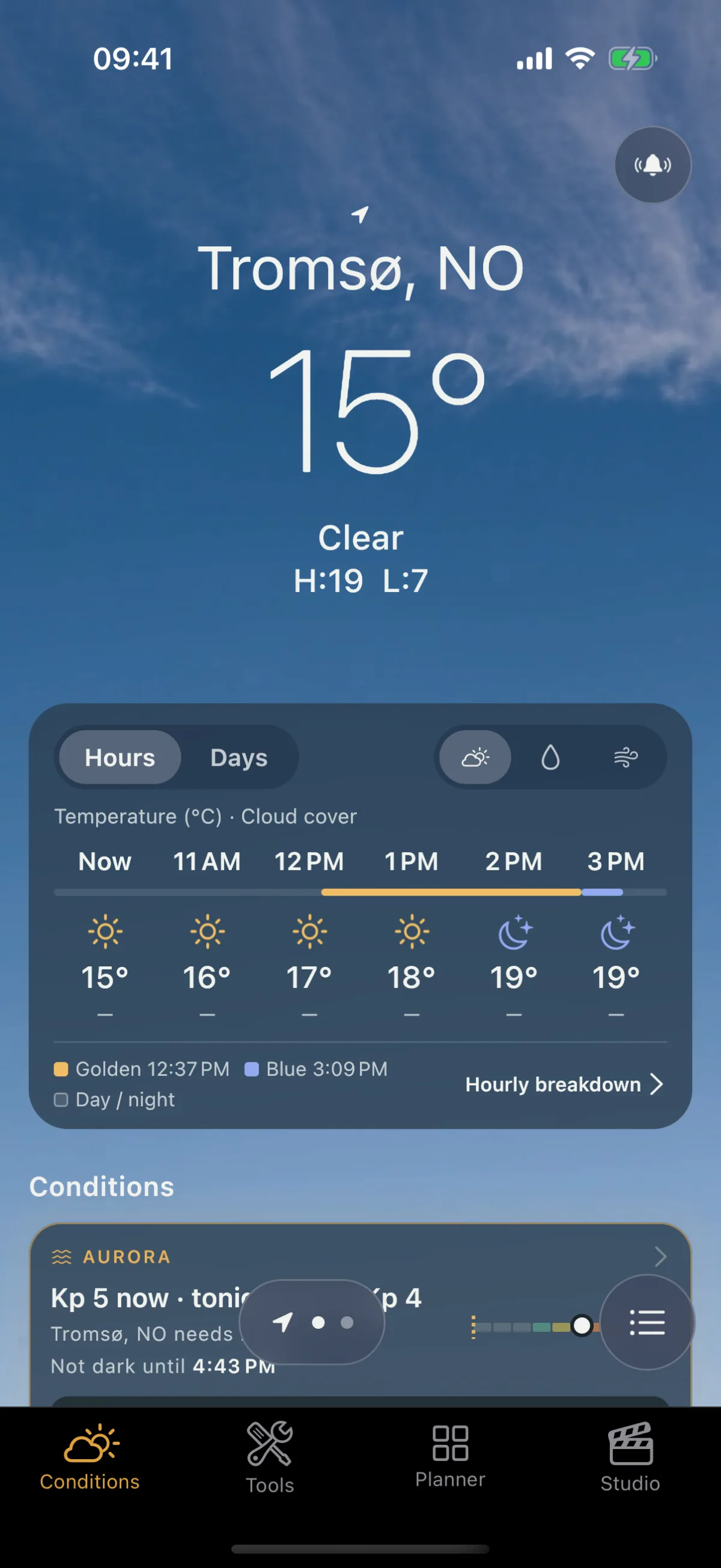
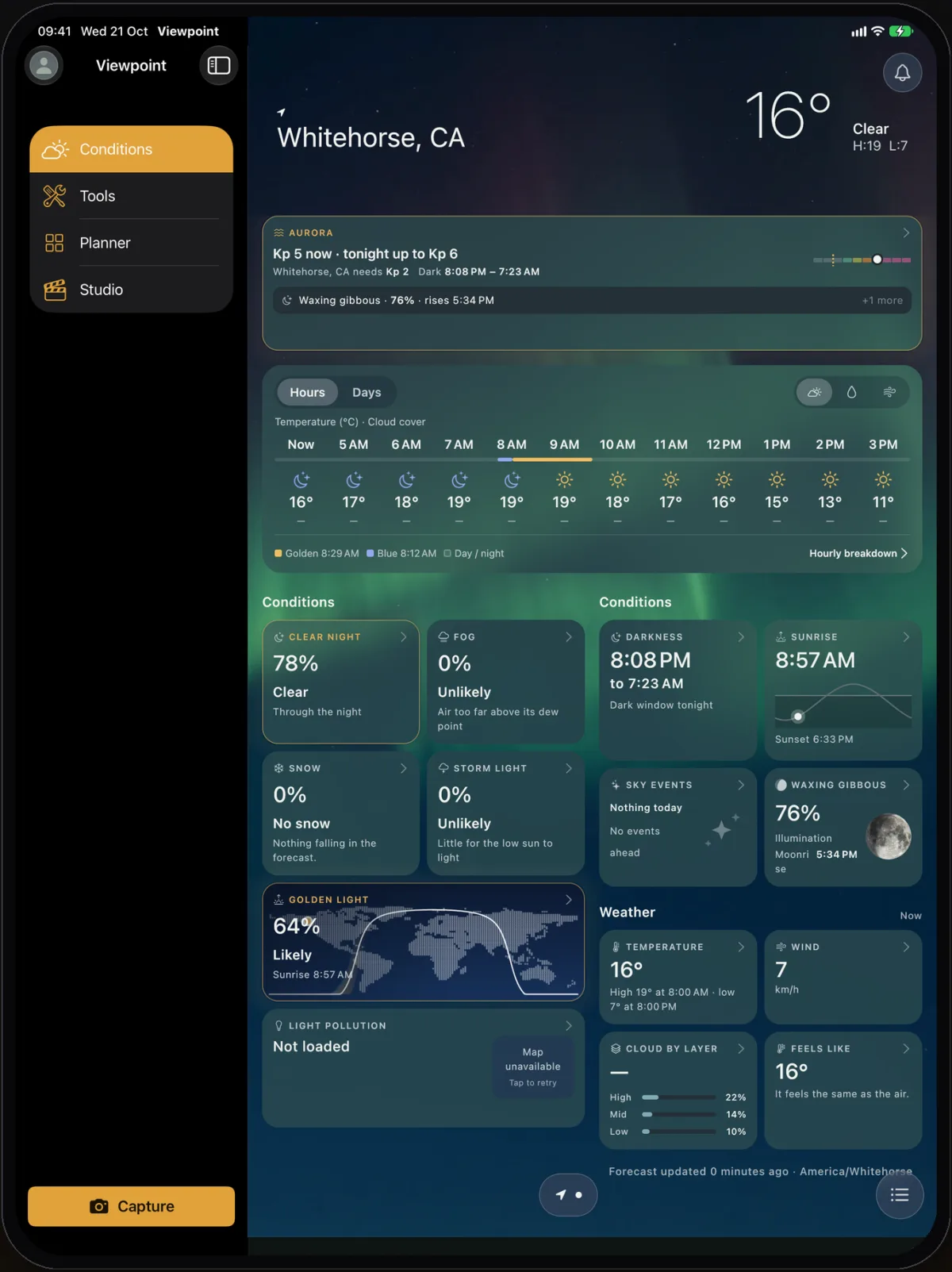
Viewpoint tells you two things: whether the aurora can reach your spot at all, and the facts for tonight (the Kp now, tonight's forecast, your dark window, the moon and the cloud). It cannot see the display, so it never promises one. "Reaches here" is a statement about what is possible.
Why does magnetic latitude matter more than the map?
The aurora forms in ovals around the Earth's magnetic poles, which sit a long way from the geographic ones. Two places at nearly the same map latitude can be very different: a big storm reaches Chicago, while a storm of the same scale does not reach Madrid. Viewpoint uses the geomagnetic latitude of your exact spot.
What Kp do I need?
It depends on the place. Every saved spot gets its own lowest Kp: "reaches here at Kp 3" and "reaches here at Kp 7" are very different invitations. Alerts use that number, not a global one.
When does the aurora alert fire?
Only when three things hold together: the Kp has reached your place's own threshold, it is dark there, and the cloud is thin enough to see through. You get one alert per onset. If the sky goes quiet and flares up again a good while later, that is a new event.
Does Viewpoint forecast solar activity?
No. It reads the live measurement and the Kp forecast; it does not predict what the sun will do over the next few days. For that, use a dedicated space-weather or aurora forecast.
Does it work for the southern lights?
Yes, with a caveat. The geomagnetic model is weakest in the far south (Australia, New Zealand, southern South America). Treat a quiet verdict there as the model's estimate rather than the last word, and check a regional aurora forecast as well.
Which plan includes aurora alerts, and where do they work?
Aurora alerts are part of the Max plan. The aurora tile, sheet and alerts are on iPhone and Android; the web app shows the aurora card on a spot, with the reach verdict, tonight's Kp, the dark window and the bell.