🎒 Gear & Setup
Do you need a star tracker for Milky Way photography?
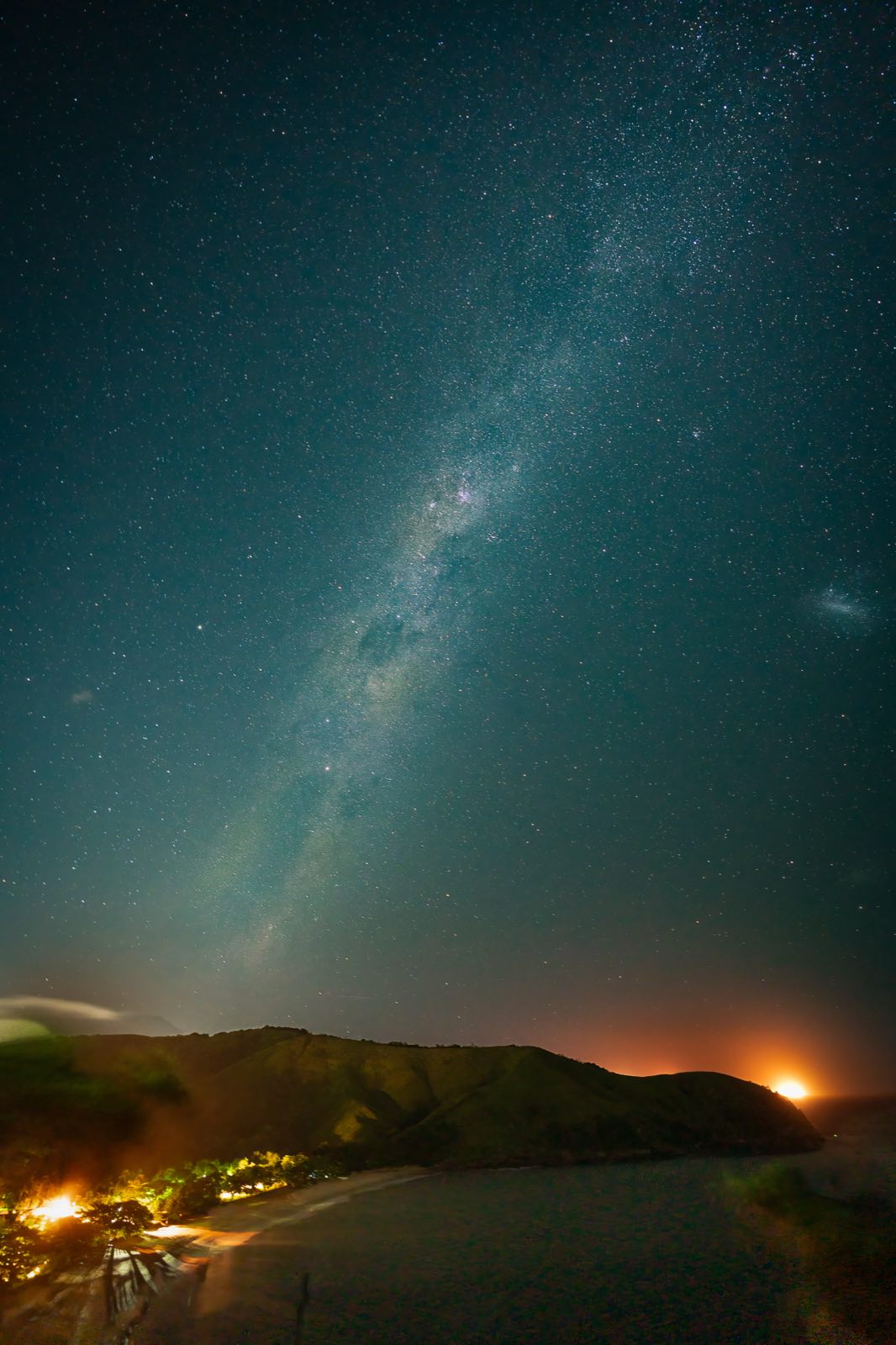
A star tracker is one of the biggest jumps in astrophotography quality you can make — and also a piece of kit plenty of photographers buy before they need it, or skip when it would transform their images. The honest answer to "do I need one?" isn't a shopping recommendation; it's a number. Your lens, aperture and the sky decide how long you can expose before the stars smear, and whether that ceiling is holding your Milky Way shots back. Here's how to work it out before you spend anything.
The stars appear to move because the Earth turns, and that motion sets a hard limit on astrophotography: expose too long and pinpoint stars stretch into little streaks. To gather enough light from a faint subject like the Milky Way, you want long exposures — but the sky won’t let you, not without help. A star tracker is a small motorised mount that rotates the camera at exactly the Earth’s rate, so the stars stay still on the sensor and you can expose for minutes instead of seconds. The question isn’t whether that’s useful — it’s whether your photography has hit the wall that makes it necessary. That’s a calculation, not a purchase.
What a star tracker actually does
A tracker cancels the Earth’s rotation. You polar-align it (point its axis at the celestial pole), and it turns the camera counter to the sky’s apparent motion. The result: stars stay as points during a long exposure. That unlocks two things a static tripod can’t give you:
- Much longer exposures — minutes rather than the 10–20 seconds a tripod allows — so the sensor gathers far more light.
- Lower ISO and cleaner files — because you’re collecting light over time instead of amplifying a short exposure, tracked Milky Way shots have dramatically less noise and more detail.
It doesn’t make you a better composer or replace a dark sky — it just removes the time limit.
Your untracked ceiling — the number that decides it
Before you can know whether you need a tracker, you need to know the limit you’re actually hitting. On a fixed tripod, the longest exposure you can use before stars visibly trail depends on your focal length, your aperture, and your camera’s sensor — captured by the 500 rule (a rough guide: 500 ÷ focal length = seconds) and the more accurate NPF rule (which accounts for aperture and pixel density). A wide 14mm lens might give you 20+ seconds; a 35mm lens drops you to single digits.
Viewpoint’s astro-shutter calculator gives that ceiling for your exact kit (see also the 500 vs NPF rule). Run it first. If your untracked exposures are already clean and detailed at that limit, you may not need a tracker at all. If you’re constantly fighting noise because that ceiling forces you to ISO 6400, that’s the signal a tracker would transform your results.
What tracking buys you past the ceiling
Once you know your untracked limit, the case for a tracker is simply everything beyond it:
- The Milky Way core with real depth — dust lanes, colour, faint nebulosity that a 15-second frame never records.
- Longer focal lengths — a tracker makes 35mm, 50mm and beyond usable on the stars, where the untracked ceiling is punishingly short.
- Clean single exposures instead of stacking many noisy frames to fake the same light.
If your ambition is detailed deep-sky or a rich galactic core, the ceiling is the thing standing in your way, and a tracker is the direct fix.
The trade-off: the foreground problem
A tracker isn’t free of compromise, and this is the honest catch. When the mount moves to keep the stars sharp, it moves the land — so a tracked frame has a sharp sky but a blurred foreground. The standard solution is two exposures: one tracked frame for the sky, one static (untracked, tracker off) frame for the land, blended together later. That means a tracker adds a step to both your capture and your editing, and a little more gear to carry and polar-align in the dark. For a photographer who wants one simple frame, that’s a real cost to weigh.
The alternative without a tracker
If the calculation says you’re close, or you’d rather not add the gear, there’s a middle path: shoot several untracked frames at your ceiling exposure and stack them in software to average out the noise. It won’t match a tracker for reach or the longest exposures, but it meaningfully cleans up a Milky Way shot with no extra hardware — a good next step before committing to a mount.
Who genuinely needs one
Put simply: you need a tracker when your untracked ceiling is forcing noisy, short exposures that cap the quality you want — typically once you’re chasing a detailed galactic core, shooting longer than ~24mm, or printing large. If you’re shooting wide, happy with your current files, or new to astro, spend the time (and the dark, moonless nights — see Milky Way season) before you spend the money. The calculator tells you which camp you’re in.
Quick-start checklist
- A tracker cancels the Earth’s rotation — long, low-ISO exposures with pinpoint stars.
- Find your untracked ceiling first — the 500/NPF calculator, for your exact lens and camera.
- Clean at that ceiling? You may not need one. Fighting noise at it? A tracker will transform your shots.
- Tracking sharpens the sky but blurs the land — plan on a two-exposure sky+foreground blend.
- Not ready to commit? Stack several untracked frames to cut noise first.
- Match the spend to the ambition — detailed core and long lenses need it; wide-and-happy doesn’t.