🌅 Sun · Golden & Blue Hour
Golden hour or blue hour: which light to choose
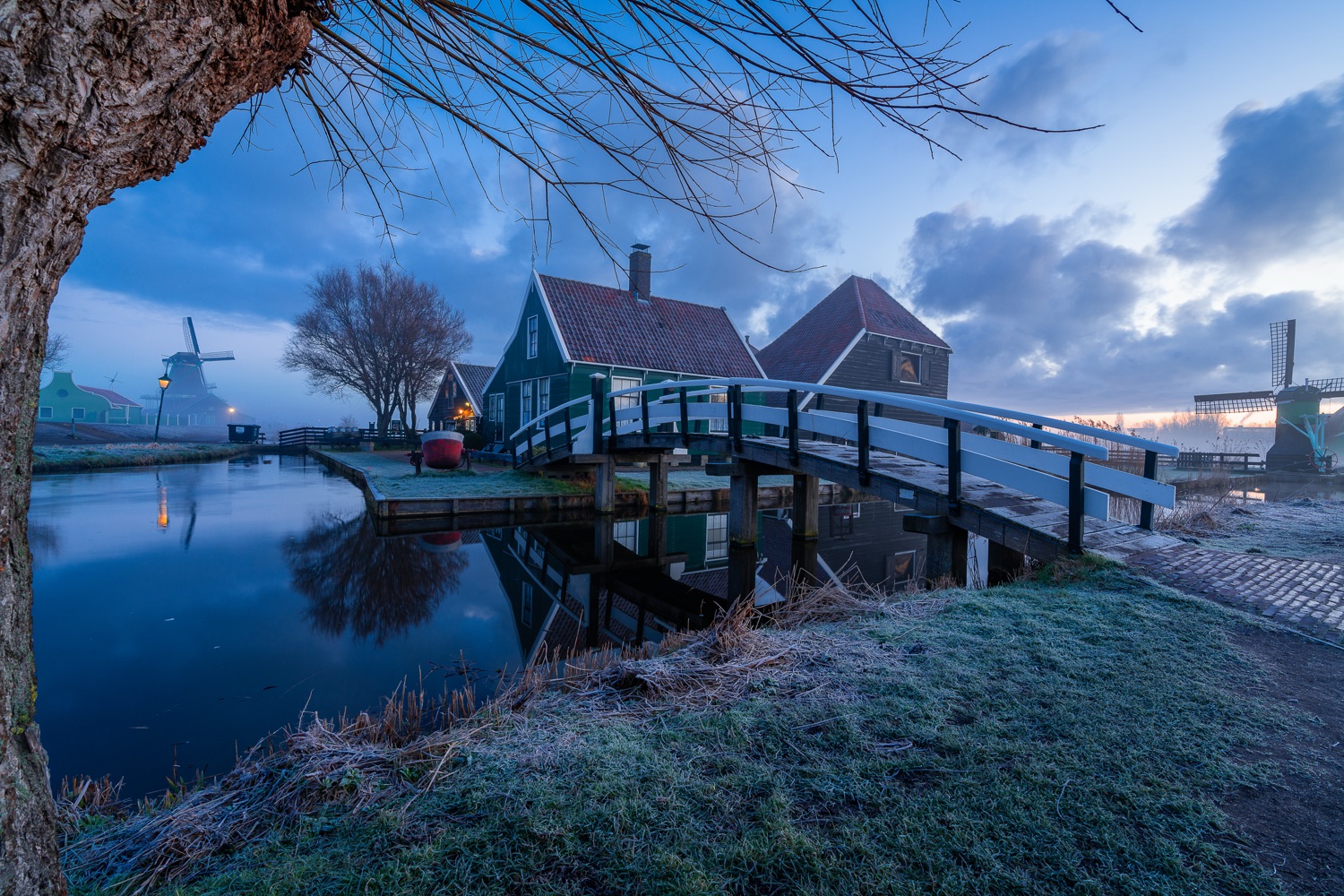
Golden hour and blue hour aren't rivals — they're consecutive windows with completely different light. Golden hour hands you warm, raking, directional sun; blue hour follows with cool, even, shadowless twilight. Knowing what each is for lets you pick the right one — or, better, shoot both in one evening.
People talk about golden hour and blue hour as if you have to choose between them. You don’t — they happen back to back, one sliding into the other as the sun crosses the horizon. The real question isn’t which is better; it’s which light suits the photograph you’re making, and how to be ready for both when they arrive minutes apart. Both are set by one thing: how far the sun sits above or below the horizon.
Two windows, one after another
Each window is defined by the sun’s altitude — its angle relative to the horizon — not by the clock.
- Golden hour runs while the sun sits roughly +6° down to −4° of the horizon. The light is warm, low, soft, and strongly directional.
- Blue hour follows, while the sun is roughly −4° to −8° — just below the horizon. The direct warm light is gone; the sky fills with even, cool, saturated twilight.
At sunset they run in that order — golden, then blue. At sunrise the sequence reverses: blue hour first, brightening into golden as the sun climbs. They’re consecutive and continuous, which is the single most useful fact here: catch the end of one and you’re already set up for the other. (For the full picture of how these map onto civil and nautical twilight, see the pillar guide, how to shoot golden hour and blue hour.)
Golden hour: warm, directional, textured
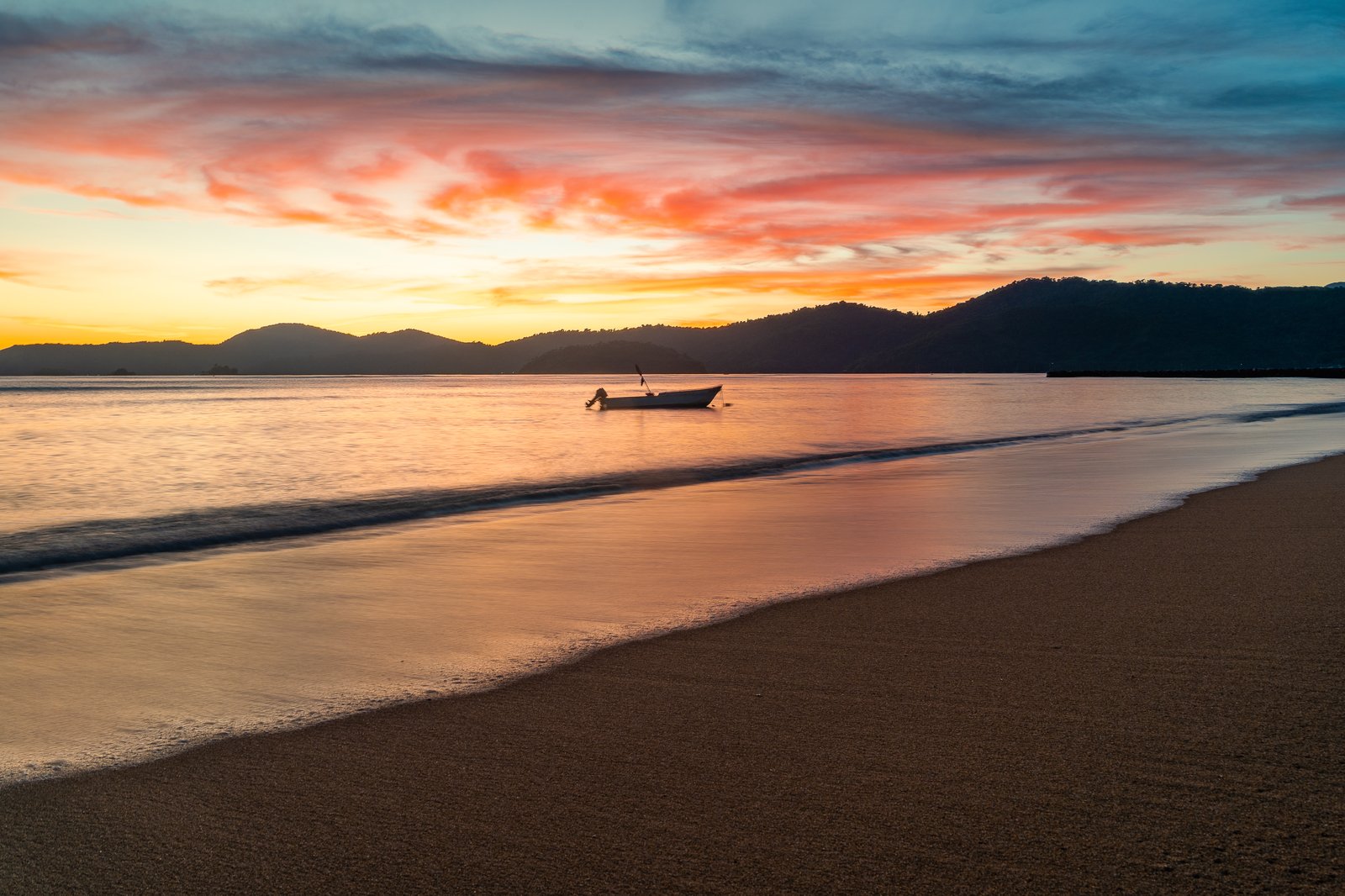
Golden hour is the light of texture and depth. A low sun rakes across the land rather than falling straight down, so every ridge, ripple, dune and blade of grass throws a long shadow that reveals form. The long path through the atmosphere scatters the blues away and leaves the warm reds and golds behind.
It’s the window for side-lit mountains catching the last warm wash, forests with light filtering between trunks, back-lit rim glows and silhouettes, and portraits with a soft warm edge. Because the light is directional, where you stand relative to the sun matters enormously — front-light flattens, side-light sculpts, back-light glows.
- Settings: the scene is still bright, so start near low ISO, f/8–f/11 for landscapes and let the shutter fall where it lands. Watch your highlights — the sun and bright sky blow out fast.
- White balance: shoot RAW and resist the camera’s instinct to “correct” the warmth. Auto white balance often neutralises the very gold you came for. Dial a fixed warm balance (around 5500–6500 K) or set it later — in RAW that’s a free, lossless decision.
Blue hour: cool, even, calm
Blue hour is the light of mood and stillness. With the sun just below the horizon there are no shadows and almost no contrast — the whole scene sits under one even, deep-blue wash. It’s the window where artificial lights balance the sky: a city’s windows, street lamps and lit landmarks glow at roughly the same brightness as the twilight, so cityscapes and harbours come alive without the harsh black sky of full night.
It also suits long-exposure seascapes (the soft light smooths the scene) and any composition that wants calm over drama.
- Settings: the light is fading fast, so you’re into longer shutter speeds — often several seconds. A tripod becomes essential, and a remote release or 2-second timer stops shutter shake.
- White balance: the blue is the point, so keep it cool — but if it drifts toward muddy, nudge a little warmth back. Expose for the sky and let the foreground sit darker; it reads naturally at twilight.
Which one to shoot
If you only have time to commit to one, decide by the picture you want:
| You want… | Shoot |
|---|---|
| Warmth, texture, long shadows, drama | Golden hour |
| Directional, sculpting light on a landscape or face | Golden hour |
| Calm, even, moody light | Blue hour |
| A cityscape where lights balance the sky | Blue hour |
| Smooth long-exposure water with soft light | Blue hour |
There’s no “correct” answer — a sea cliff that’s a textured masterpiece in golden side-light becomes a serene blue silhouette an hour later. They’re two different photographs of the same place.
Better still: shoot both
Because the windows are consecutive, the strongest plan is to work the whole transition. At sunset, arrive before golden hour, shoot the warm directional light as the sun drops, then stay put — as the sun slips under the horizon the scene cools into blue hour and the artificial lights come up. You’ll often get two completely different keepers from one tripod position twenty minutes apart.
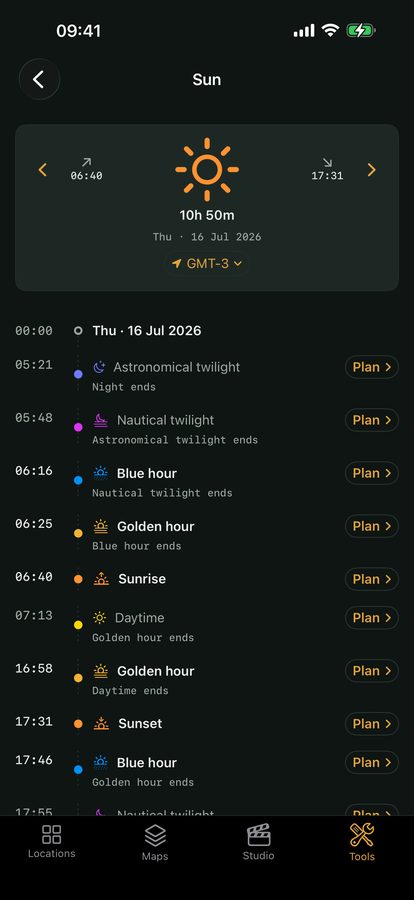
The catch is that the light changes by the minute and the windows are short — shorter near the equator, longer toward the poles. So you don’t want to be guessing the times. Viewpoint’s sun timeline marks golden hour, blue hour and every twilight for your exact spot and date, so you can be set up and composed before the light turns rather than chasing it.
Quick-start checklist
- Know the times — pull golden hour and blue hour for your location from the almanac and arrive before the first one opens.
- Pick your light — warm/textured/directional → golden; cool/even/citylights → blue.
- Golden hour: low ISO, f/8–f/11, a warm RAW white balance, mind the highlights.
- Blue hour: tripod, longer shutters, keep the white balance cool, expose for the sky.
- Don’t pack up early — stay through the transition and shoot both from one spot.
- Keep shooting — the frame two minutes later is often the keeper.